

American Oyster Chronicles
If you’re a true oyster connoisseur, you know that America’s varietals are far more nuanced than East Coast and West Coast. Each oyster-producing region in the U.S. has different growing conditions that influence the shape, size, texture, and flavor. Some call it “merroir,” an aquatic riff on the concept of terroir in wine. Here’s a cheat sheet to some of our favorites, plus where to taste them. (Title Image Credit: Rappahannock Oyster Co.)
WEST COAST
Tomales Bay, California
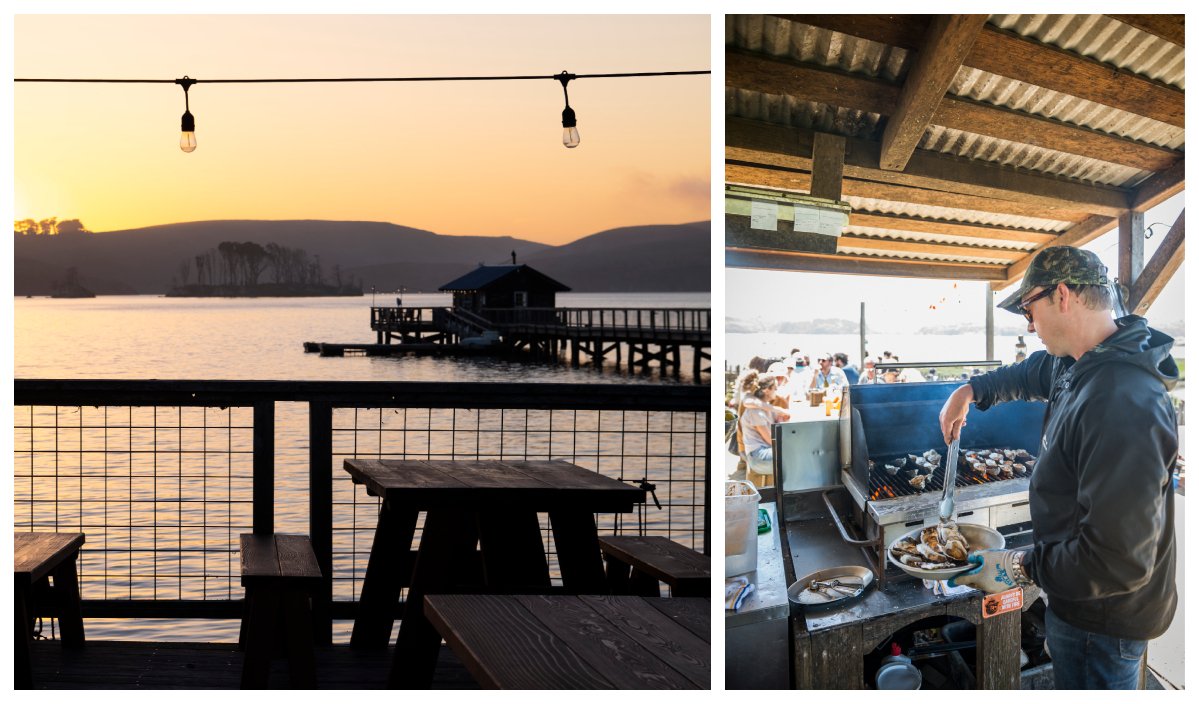
Left Credit: Adahlia Cole, Right Credit: Remy Hale
Oyster country doesn’t get dreamier than Tomales Bay. Located 80 minutes north of San Francisco in bountiful West Marin County, the bay serves as the eastern boundary of the Point Reyes Peninsula and is a short drive from the wineries of Napa and Sonoma counties. A constant upwelling of nutrients from the well-oxygenated waters flowing in from the chilly Pacific Ocean make this estuary a prolific hub for California’s aquaculture industry. Today, five farms cultivate diverse species on the bay ranging from tiny but umami packed Olympia to buttery Kumamoto. The 115-year-old Tomales Bay Oyster Company, the oldest bivalve farm in California, is known for its seasonal Golden Nuggets. With every tide, the oysters go through a unique tumbling system that produces a deep-cupped, plump oyster with a melony-finish. Hog Island Oyster Co. uses rack-and-back farming techniques to grow its flagship Hot Island sweetwaters, which taste just like the name suggests. Where to try them: Nick’s Cove, a 1930s fishing shack reimagined as a modern bayfront inn got a serious glow up in 2023. Celebrated chef Chris Cosentino consulted on the menu which includes the hit barbecued oysters sourced from Tomales Bay Oyster Company. Let All Roads North arrange for a private kayak guide to take you to see the farms in the bay.
Willapa Bay, Washington
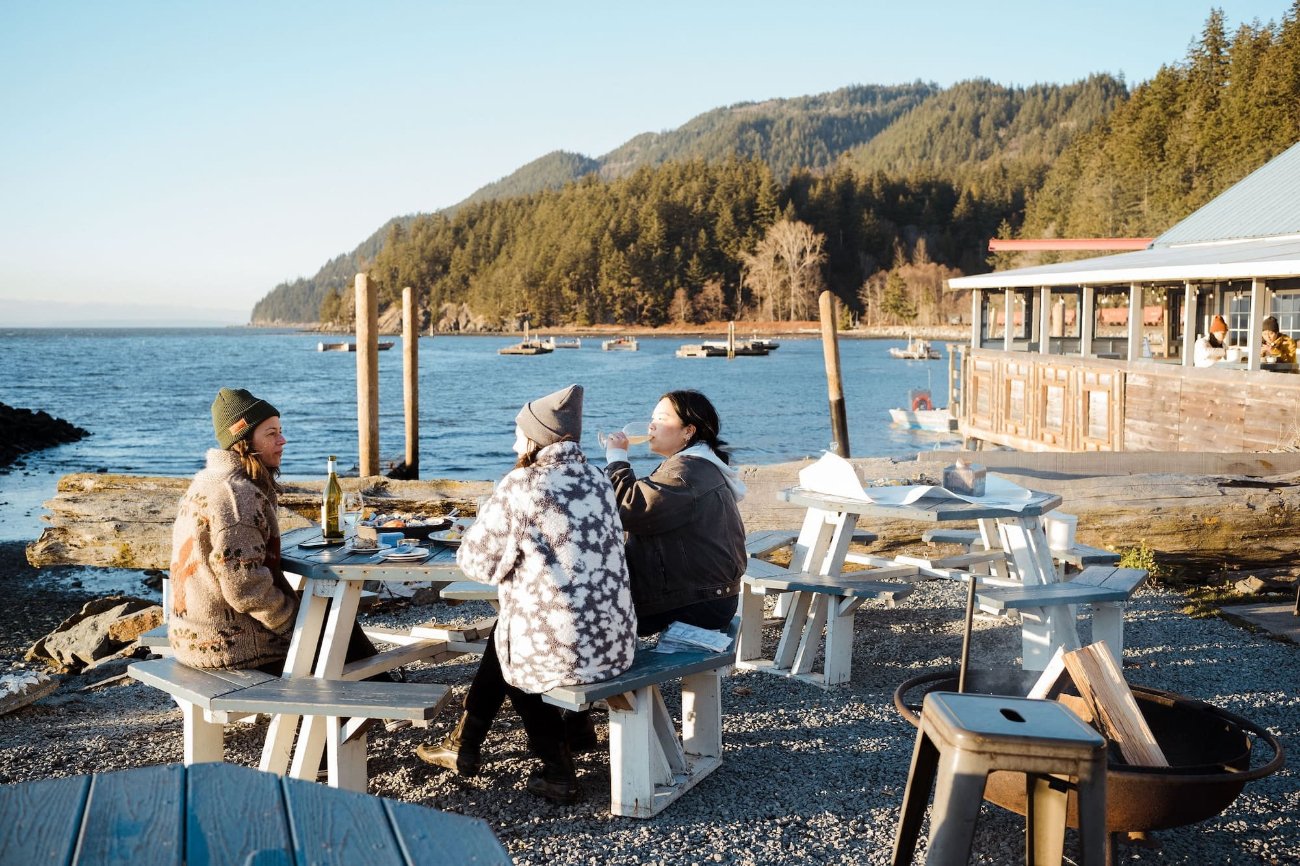
Credit: Taylor Shellfish Farms
Oysters cultivated in Willapa Bay off Washington’s Pacific Coast are prized for their salty-sweet balance and silky texture. Many are grown using a tide-tumbling technique, where the oysters grow in baskets or bags suspended above the bay floor. As the tide rushes in, the water agitates the bivalves and rotates the baskets, helping them form harder shells and deeper cups filled with firm meat. The process is similar to how sea glass is formed, hence the name of Taylor Shellfish Farms’ smooth-shelled, clean, crisp Beach Glass Pacific Oysters. Now run by the fifth generation of the Taylor family, the business is known for its Shigoku oysters. Meaning “ultimate” in Japanese, this
Willapa Bay off Washington’s Pacific Coast is known as the state’s premier oyster region, producing the renowned Shigoku oysters. A varietal of Pacific oysters, Shigoku, means “ultimate” in Japanese, and is so named for its plump meat and strong, briny flavor profile and sweet finish. Their Fat Bastards are a more robust, big brother of the Shigoku. Where to try them: Taylor Shellfish Farms has three oyster bars in Seattle, but it’s worth the scenic, one hour and 40-minute drive north to picnic at the family’s farm and shellfish market on Samish Bay in the small town of Bow. Tables overlooking the oyster beds in the bay are first-come, first-serve and the menu is whatever is fresh that day. You can’t go wrong with a shuckers dozen and a bottle of Washington Chardonnay.
GULF COAST
Grand Isle, Louisiana
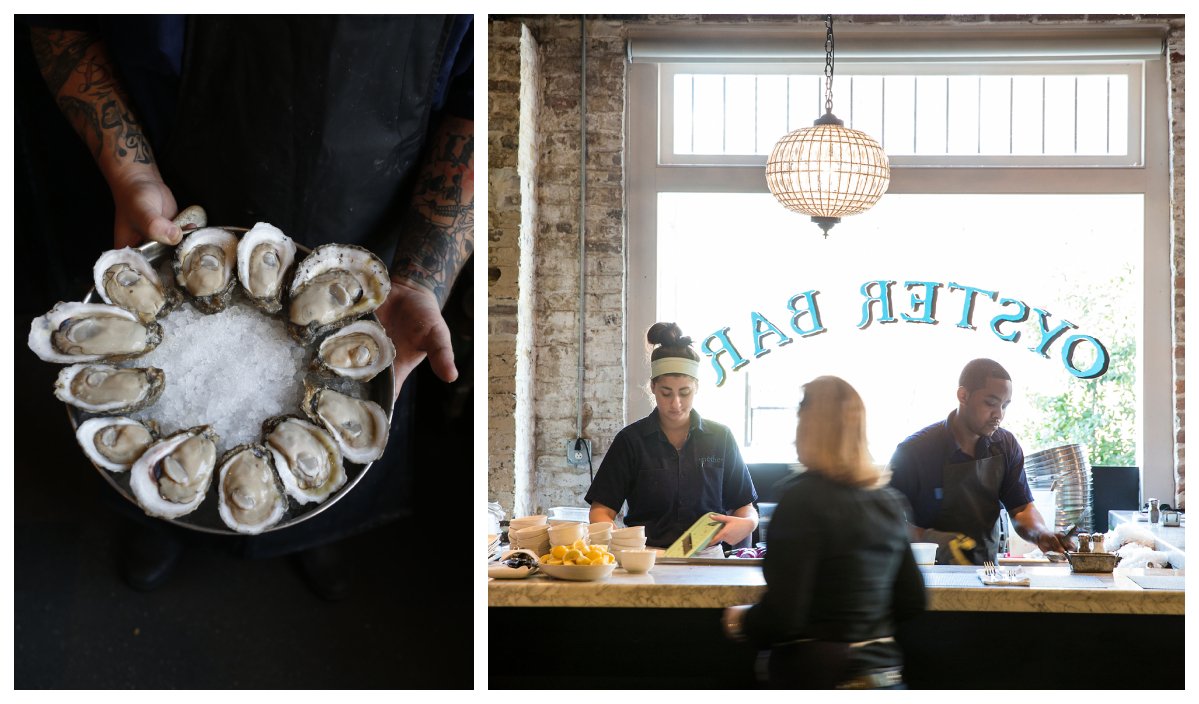
Credit: Peche, New Orleans
Grand Isle, a barrier island where Louisiana’s estuary meets the Gulf, was once booming with oyster production. Over the years, frequent hurricanes damaged the oyster reefs putting the industry at risk. Now, a collective of growers has banded together to adopt an innovative cultivation technique known as off-bottom farming, where the oysters are grown in floating cages rather than directly on the ocean floor. The late third-generation oysterman Jules Melancon of Caminada Bay Oyster Farm, is credited with having pioneered the method in Grand Ise. Marketed as Grand Isle Jewels, these boutique oysters from producers such as Bright Side Oysters and Little Moon Oyster Ranch, are sought out for their distinctively salty, creamy, and buttery flavor profile. Where to try them: An oyster crawl of the top tables in New Orleans showcases Grande Isle Jewels in all of their glory, from raw to grilled. Hit the marble-topped raw bar at seafood temple, Pêche, try them Cajun-style at Mosquito Supper Club, and order the oyster sampler at Seaworthy to compare flavor profiles.
EAST COAST
Damariscotta River, Maine
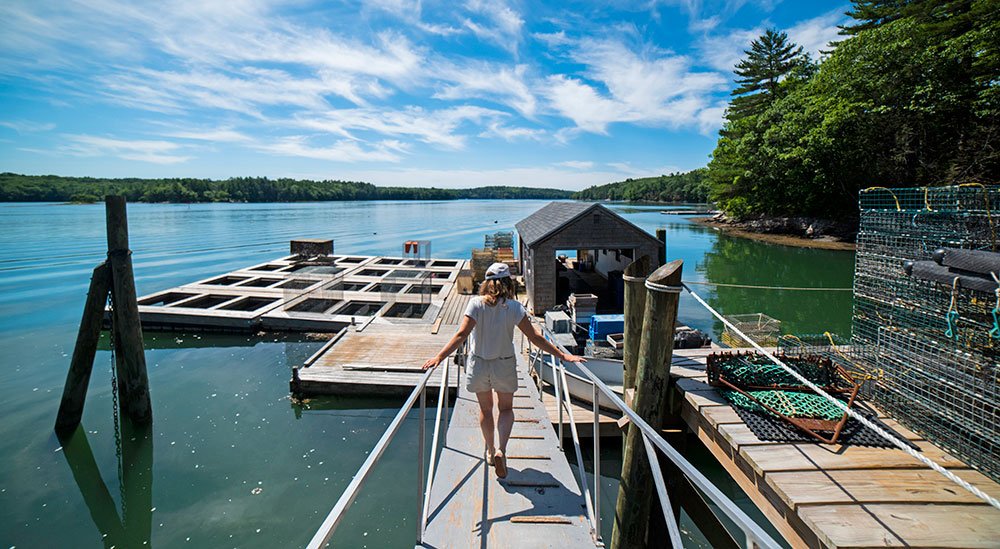
Credit: Glidden Point Oyster Farms
With nearly 3,500 miles of rugged coastline, Maine is the ideal place to cultivate and harvest oysters. The cold, nutrient rich Atlantic ocean gives Maine oysters a distinctly crisp and briny, yet buttery and sweet flavor. Midcoast, the Damariscotta River is considered the oyster capital of Maine. Around 80 percent of all Maine oysters are harvested from this 12-mile estuary, and you’ll find the state’s oldest operating oyster farms here. Where to try them: Take to the bay by boat for an oyster and wine tasting experience that passes many of the region’s top bivalve farms, sampling local varieties, including bright and briny Pemaquid to succulent Glidden Points oysters, and a sommelier is on hand for pairings. You can try the latter at the source. Glidden Pt. Oyster Farms in Edgecombe, where you can enjoy tastings and shucking lessons on its patio.
Chesapeake Bay, Maryland + Virginia

Credit: Rappahannock Oyster Co.
In the late 19th century, oyster harvesting in the Chesapeake was so profitable that oysters earned the moniker, “white gold.” Numbers dwindled over the years due to a combination of over-harvesting and habitat loss. Today, oyster farming has helped bring the mollusks back to the bay. Nowhere will you find such variety. Flavors span the salt spectrum, from subtly sweet to ultra briny. Connected to both the freshwaters of the Blue Ridge Mountains and the Chesapeake Bay, the Rappahannock River is an oyster growing hotspot. Its namesake oysters are delicate and sweet, with less salinity than the average East Coast oysters. Where to try them: Cousins and fourth-generation oystermen Ryan and Travis Croxton took over their grandfather’s Virginia oyster leases in 2001, when the industry was on the brink of collapse, and turned them into Rappahannock Oyster Co., one of the first commercially viable aquaculture operations in the Chesapeake. Slurp their deep cupped, buttery bivalves at the farm tasting room in Topping, Virginia, or at their oyster bars in Richmond, Charleston, Los Angeles, and Dulles airport.
Let us weave in an oyster tasting or two as part of one of our bespoke journeys:
Sonoma and Mendocino: A Farm to Table Road Trip
The Olympic Peninsula & San Juan Islands: Coastal Wanderings
Islets and Inlets: Maine Maritime Adventures